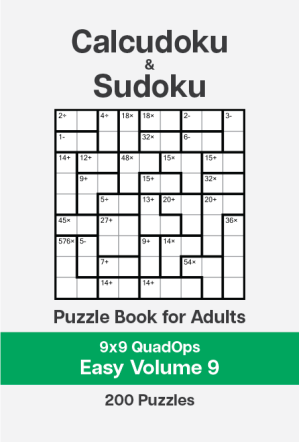
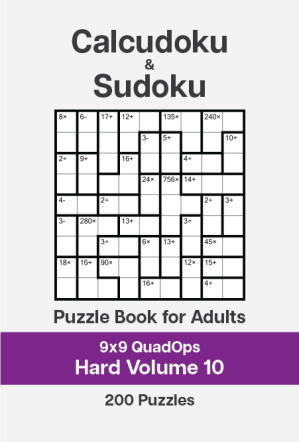
What’s inside:
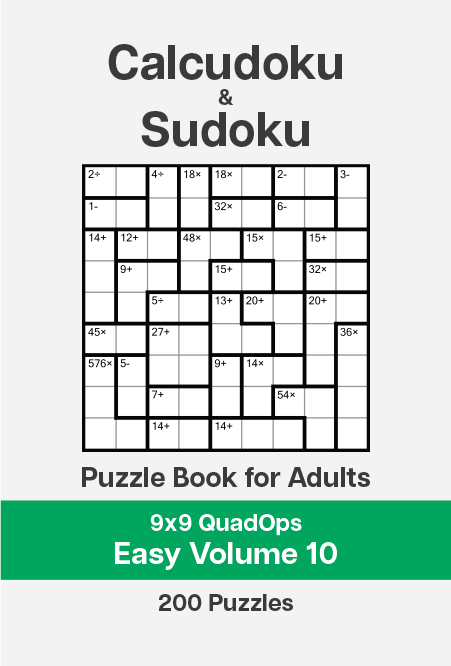
- 200 puzzles: 100 9×9-grid Calcudoku Puzzles; 100 Sudoku Puzzles; Includes solutions/li>
- In-depth strategies and techniques: Fully explained strategies with examples
User-friendly design!
- Large print: Enjoy one 4″x4″ puzzle per page
- Compact size: 6×9 format
Developing Mental Flexibility Through Logic Puzzles</h2>
Not every problem can be solved the same way. Sometimes success comes from recognizing a familiar pattern, while other times it requires stepping back and looking at the situation from a different angle. This ability to adapt your thinking is often referred to as mental flexibility, and it plays an important role in many aspects of daily life. Logic puzzles provide an enjoyable way to practice this skill by encouraging solvers to explore possibilities, reconsider assumptions, and adjust their approach as new information becomes available.
Sudoku and Calcudoku each encourage flexible thinking in their own way. A Sudoku puzzle may appear straightforward at first, only to reveal new relationships as additional numbers are placed. Strategies that work in one section of the grid may not immediately work elsewhere, requiring solvers to shift their focus and evaluate the puzzle from a different perspective. Calcudoku introduces another layer of adaptability by combining logical deduction with numerical constraints. Solvers must often balance multiple possibilities before identifying the path that leads forward.
Learning to See Problems Differently
One of the most rewarding parts of puzzle solving is the moment when a new approach unlocks progress. A clue that seemed unhelpful suddenly becomes important. A relationship that wasn’t obvious begins to stand out. These moments encourage solvers to remain open to different possibilities rather than becoming locked into a single line of thinking. Over time, this habit of examining challenges from multiple angles becomes a natural part of the puzzle-solving experience.
A mixed Sudoku and Calcudoku puzzle book provides an ideal environment for exercising mental flexibility because each puzzle type encourages a slightly different style of reasoning. Sudoku emphasizes pattern recognition and elimination, while Calcudoku adds numerical relationships that require additional analysis. Easy puzzles make these skills accessible without removing the satisfaction of discovery. As solvers move between puzzle types and uncover new solutions, they develop a more adaptable approach to logical thinking while enjoying a varied and rewarding puzzle experience.
Give this mixed Calcudoku and Sudoku puzzle book a try!