
Easy Sudoku Puzzle Walkthrough: Solve a Puzzle Step by Step
Reading the rules of Sudoku is one thing. Knowing where to start when you look at an actual puzzle is often the harder part.
Sudoku rules are simple, but that simplicity can be misleading. Each puzzle begins with some numbers already filled in, yet many new solvers still find themselves staring at the grid and wondering what to do next.
- Each row must contain the digits 1–9, without repeats
- Each column must contain the digits 1–9, without repeats
- Each 3×3 box must contain the digits 1–9, without repeats
So why can Sudoku still feel difficult?
Difficulty is not just about how many numbers are given at the start. A puzzle may have plenty of clues and still require careful thinking. What matters more is the type of logic needed, how often that logic appears, and how easily one step leads to the next.
Very easy Sudoku puzzles are usually solved with basic scanning techniques. That makes them a great place to practice looking across rows, columns, and 3×3 boxes, especially if you are learning how to spot missing numbers or use notation for the first time.
In this walkthrough, we will solve a very easy Sudoku puzzle from start to finish using simple scanning. I will also show how notation can help you track possibilities as you work through the puzzle. This is only one possible solving path, but it will give you a clear example of how to begin, keep going, and finish the grid.
Let’s get started!
Calcudoku and Sudoku Puzzle Books
Combining classic Sudoku with 9×9 Calcudoku puzzles that use all four operations, this series offers a varied solving experience across multiple difficulty levels. Whether you’re looking for a relaxing challenge or a more demanding puzzle session, there’s a volume for you.
The starting grid
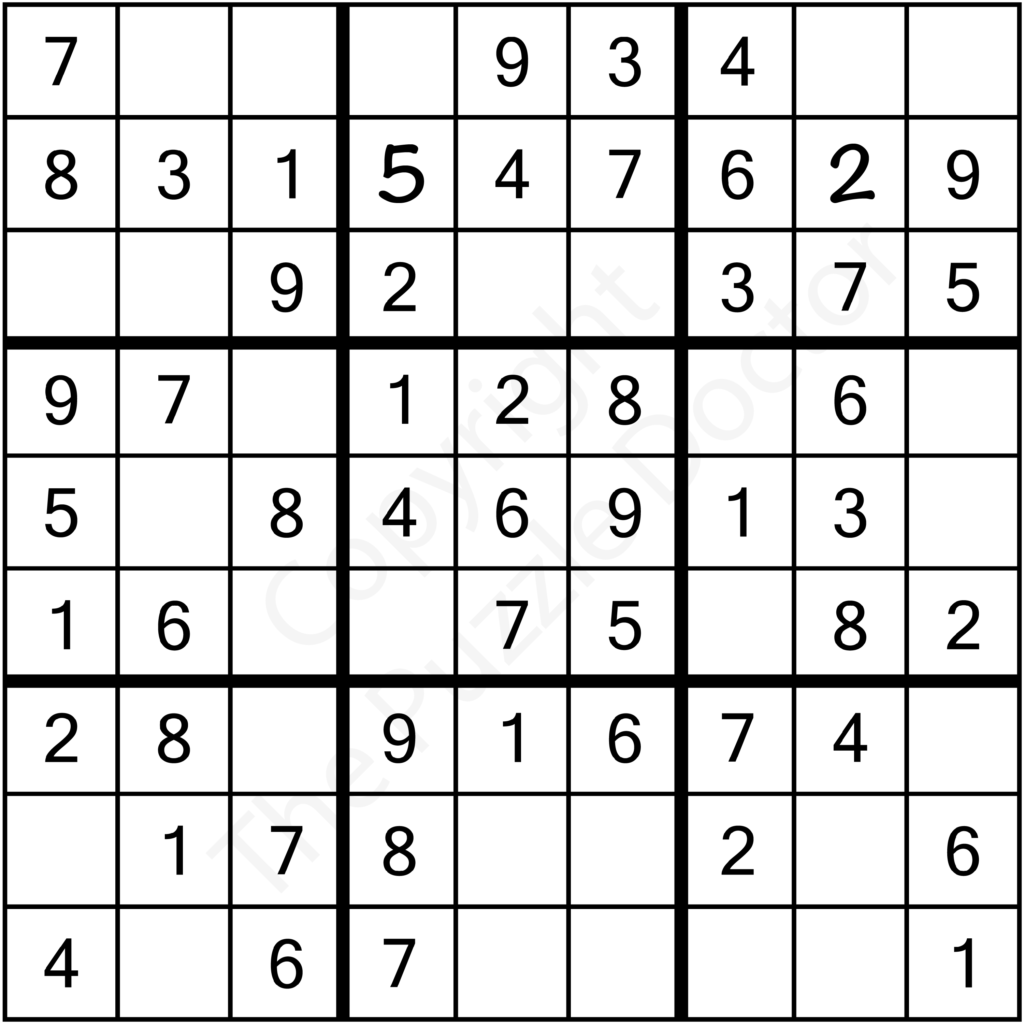
When starting a puzzle, there is a Sudoku grid. Scanning the grid, it is obvious there are many givens and we can see that many rows and columns have only two or three cells to fill in.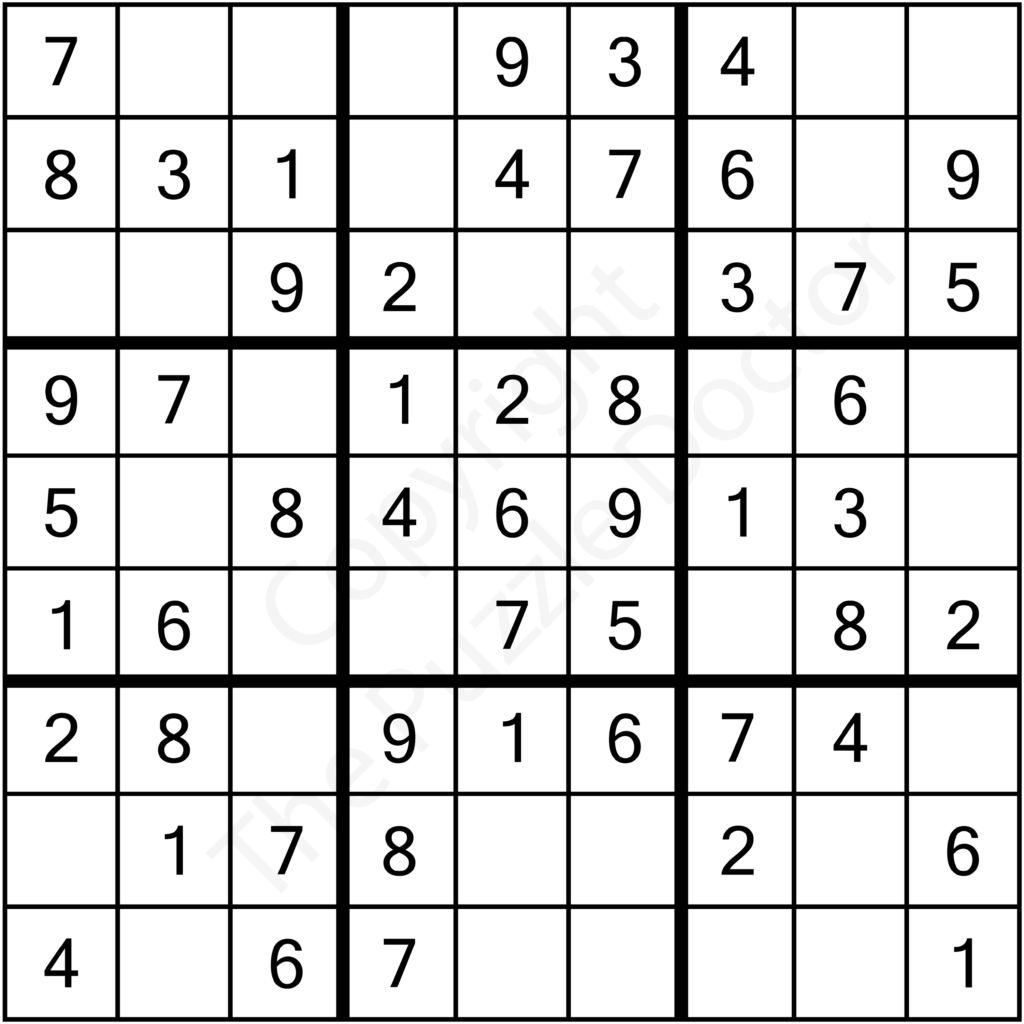
Start with the obvious, then scan, identify, then eliminate!
Starting from the top, I choose the first row with the fewest missing numbers. It is row B.
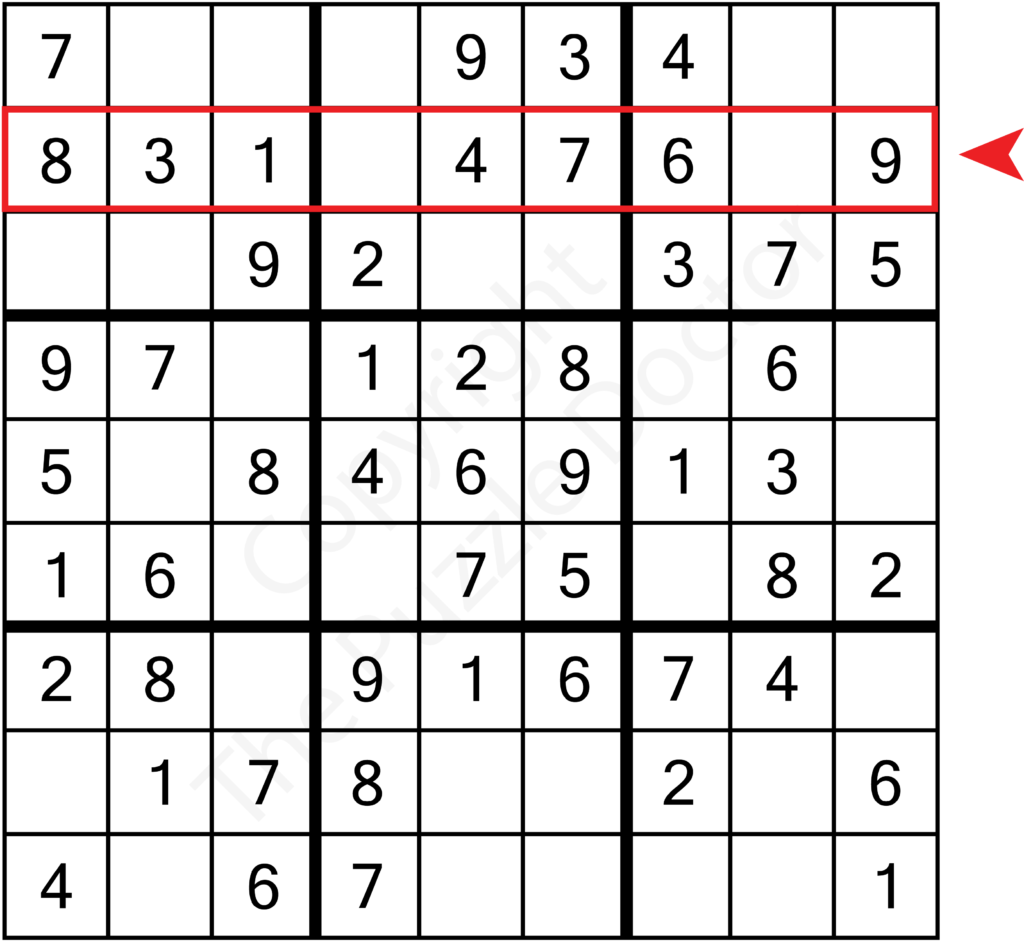
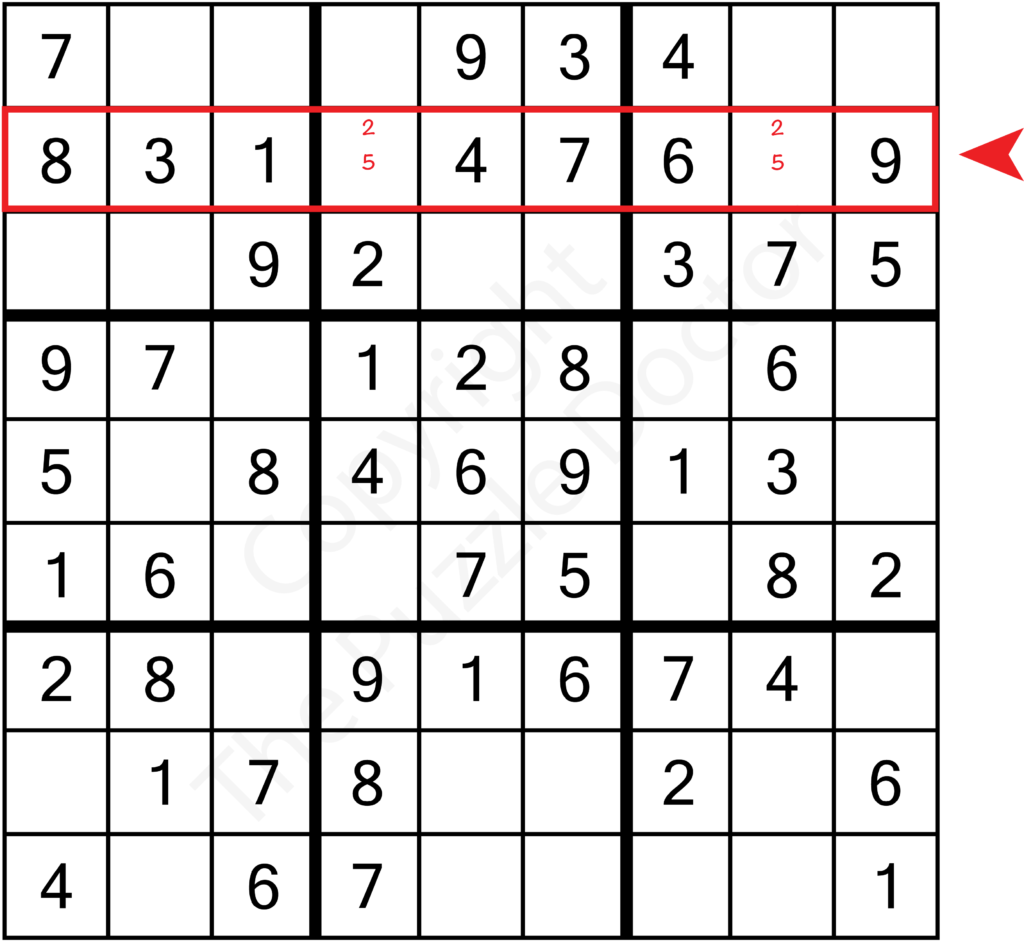
When scanning the row, I determine that 2 and 5 are missing from the row. While in real play I would not necessarily make notations on an easy puzzle, I illustrate using notation so you can see my decisions.
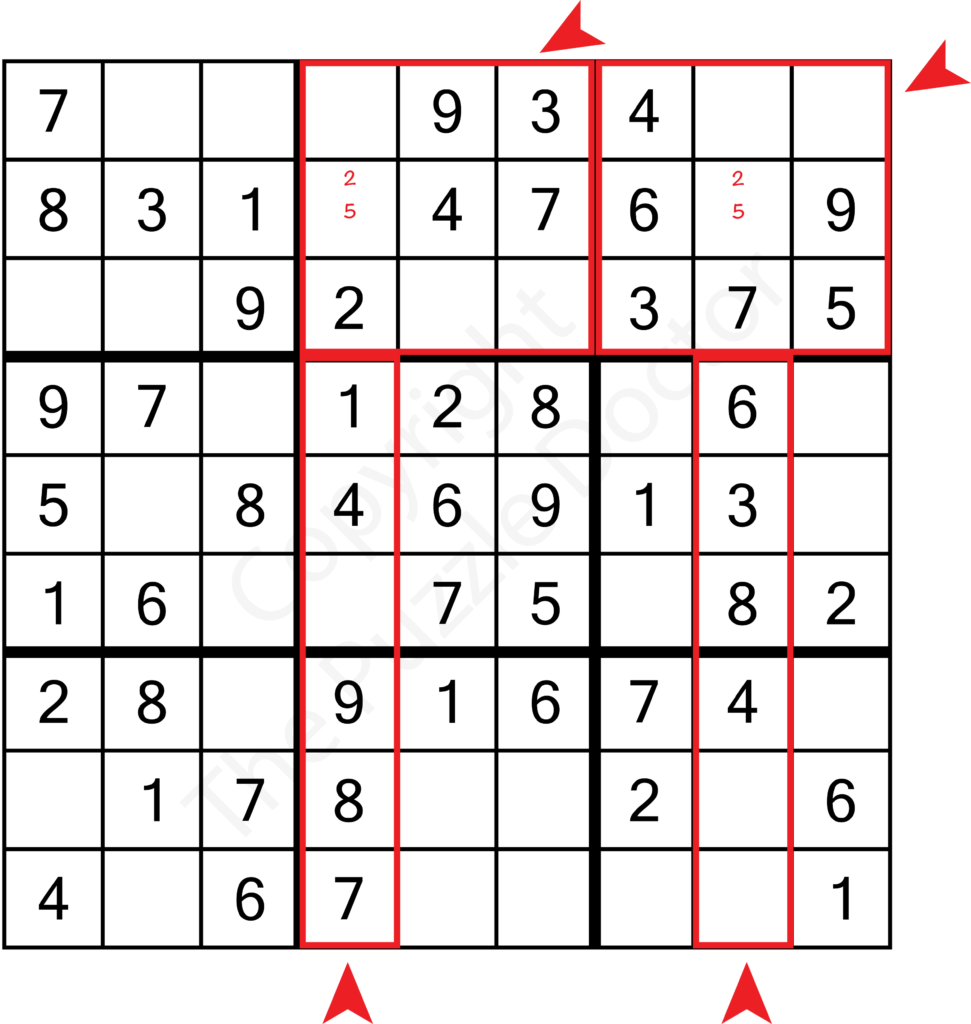
Next, I scan the columns and sub-grids associated with the target cells. In this illustration, sub-grid 2 and 3 are highlighted in red as these are the sub-grids containing the target cells in the row. Columns 4 and 8 are also highlighted as these are the columns containing the target cells.
Then, I identify numbers that violate the rules of no repeats in a sub-grid, column, or row and eliminate those numbers from possibilities. In the illustrations below, we see that in column 4, there is a 2 so that number can be eliminated in column 4 row B. In sub-grid 3, we see that the number 5 already exists. We can then eliminate the 5 as a possibility in column 7 row B. These leaves only one candidate for each cell: the number 2 can be placed in column 4 and the number 5 can be placed in column 7.

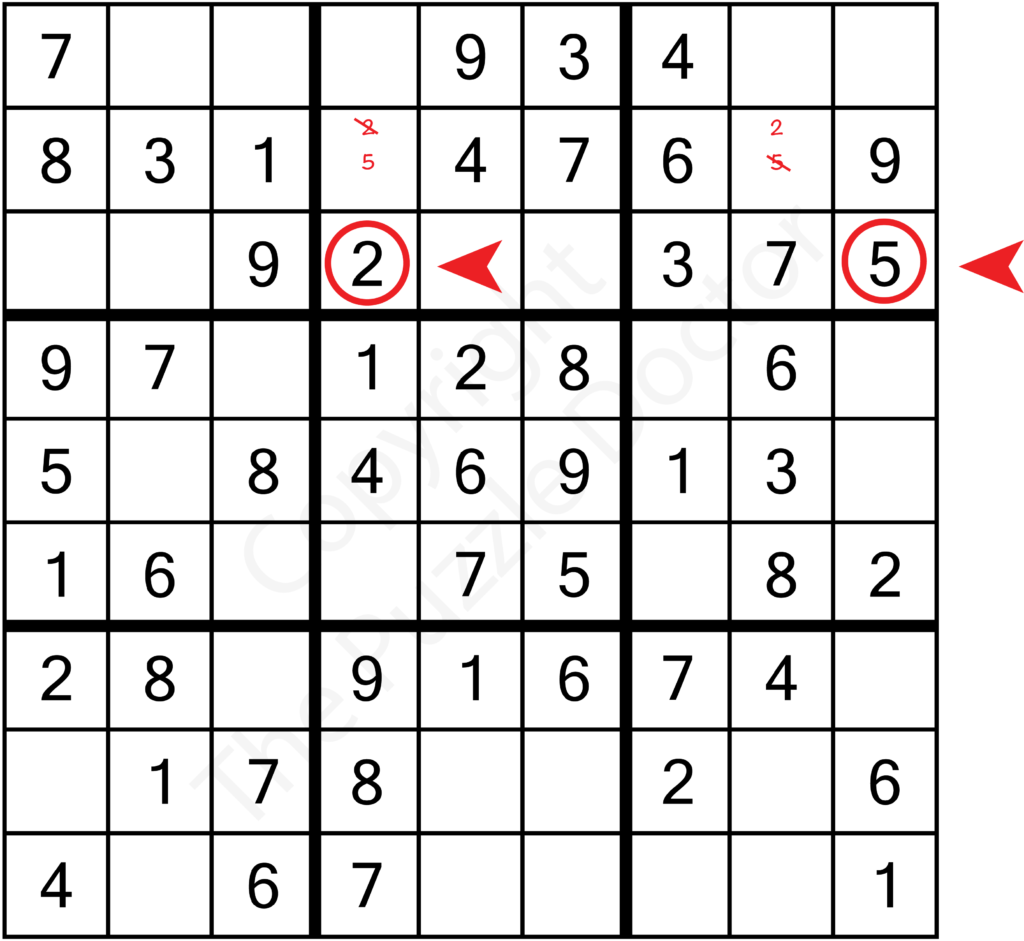
I fill in the numbers and our first row is then completed!
6×6 Calcudoku Addition-Only Series
Designed to emphasize logical deduction over complex arithmetic, these 6×6 addition-only Calcudoku puzzle books are an excellent choice for solvers who prefer a gentler challenge. The compact grid size keeps puzzles approachable, while the addition-only cages allow you to focus on mastering Calcudoku techniques and solving strategies. Whether you’re new to Calcudoku or simply looking for a more relaxing puzzle experience, this series offers plenty of enjoyable puzzles to explore.
Let’s move on to our next row!
Again we want to start with the obvious, then scan, identify, then eliminate. Here, I’ve scanned for the next row that has the fewest numbers to complete. I identify those numbers as 2 and 7.
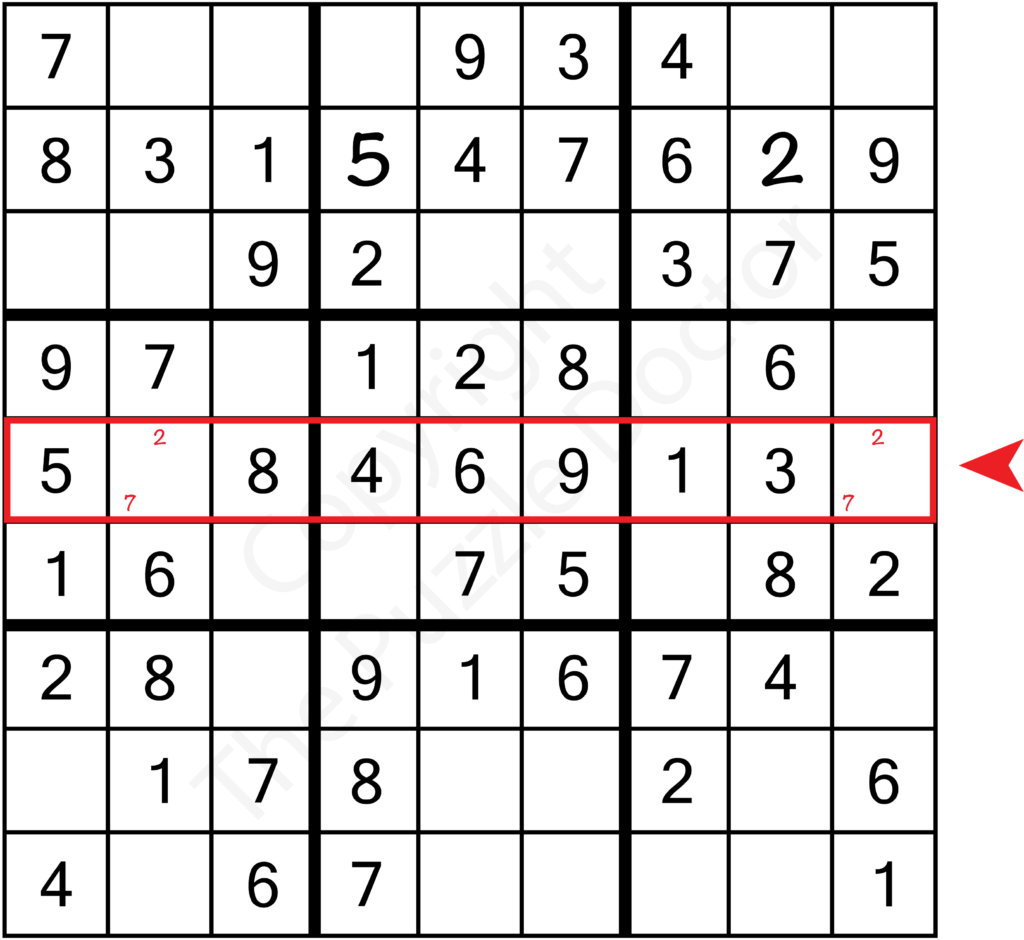
Next, I start scanning the associated columns and sub-grids to identify which numbers would result in a repeat and cannot be placed in the target cells.

That scan results in finding number 7 in sub-grid 4 column 2 which eliminates this as a possible candidate in column 2 of sub-grid 4. I also find that the number 2 is in column 9 row E of sub-grid 6. This prevents the number 2 from being a candidate in column 9 row F of sub-grid 6. Eliminating these as possibilities, I can now fill-in the numbers and complete the row.

Here we are with two rows complete!
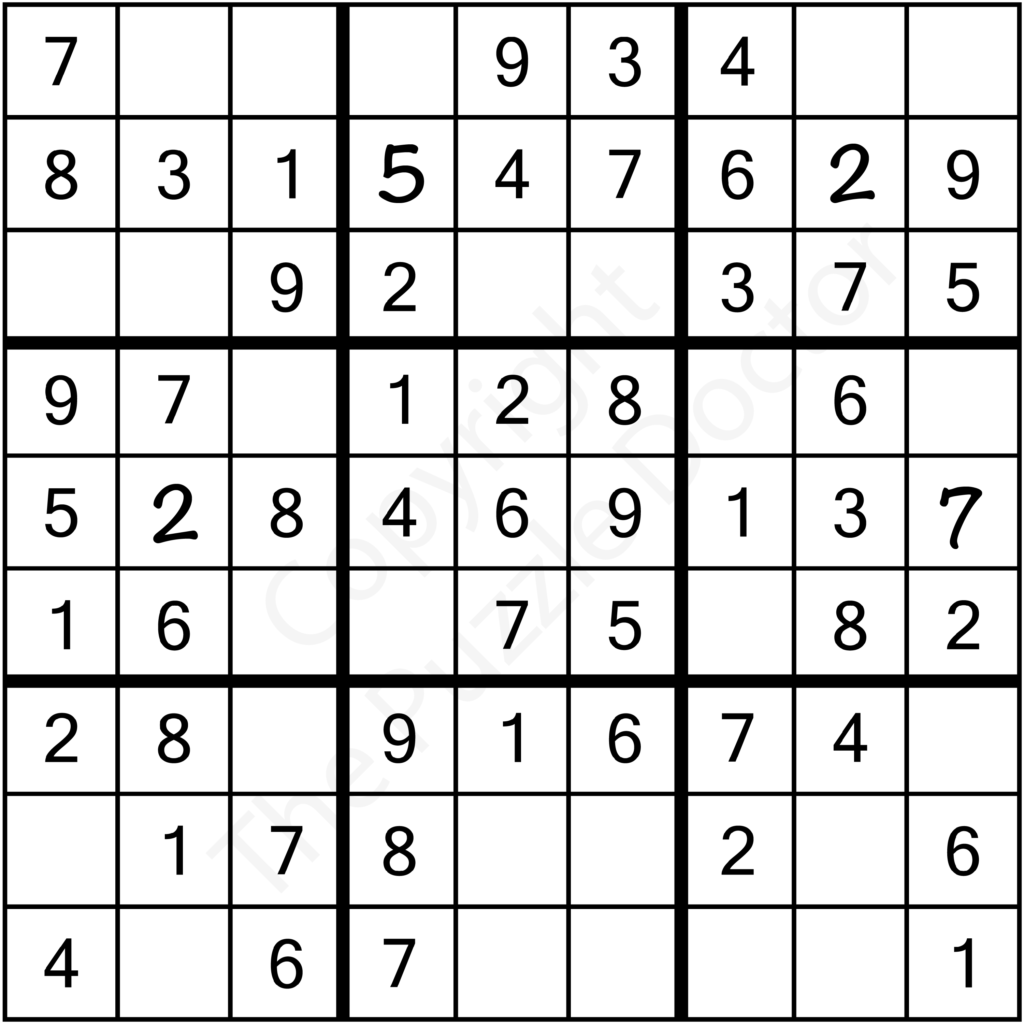
Same scan and eliminate process for the third row
Solving the third row is different because completing one cell in the row depends on completion of the other.
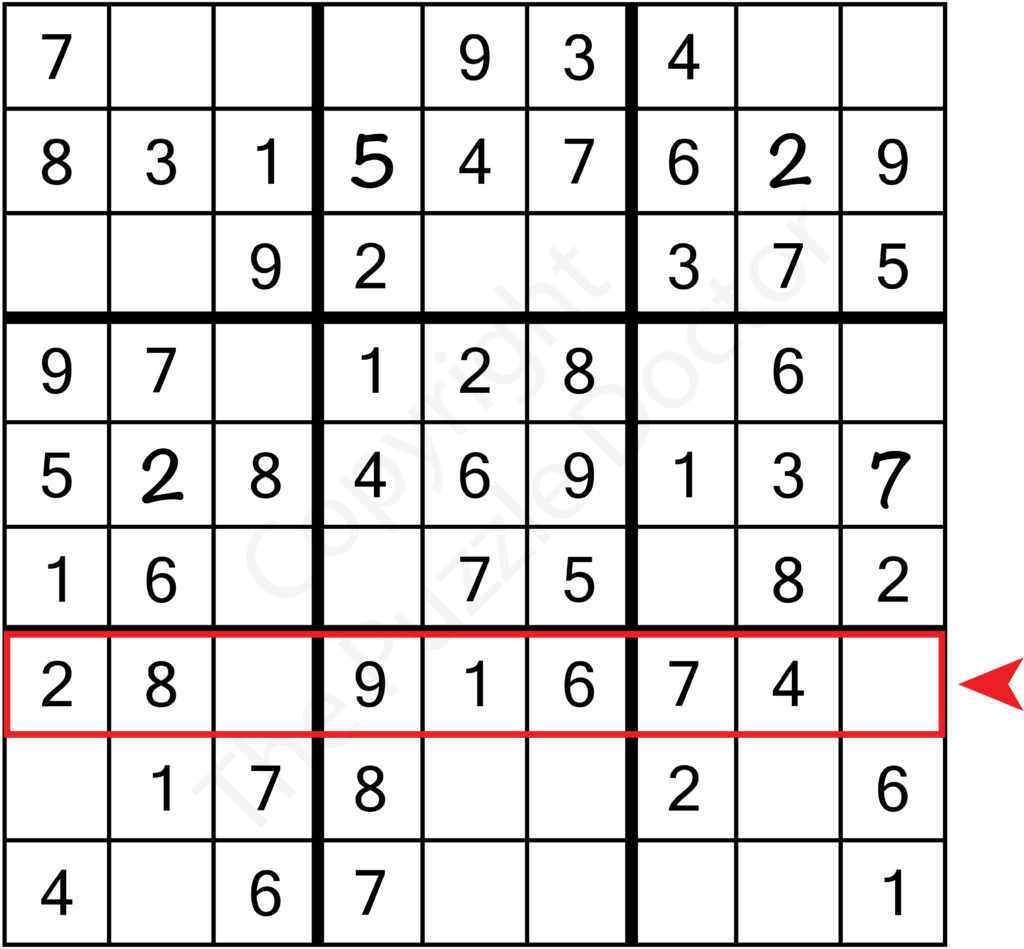
When evaluating row G, I find that the number 3 and 5 are missing. I note this then start scanning the associated columns and sub-grids to see what number can be eliminated. In sub-grid 3 column 9 I find a number 5. This means I can eliminate that number from sub-grid 9 column 9. Not so lucky looking at column 3 or sub-grid 7. However, as the second illustration shows, since we can confidently fill in the number 3 in column 9 of the same row, that leaves us with only one option in column 3. We can now confidently fill in the number 5 in sub-grid 7 column 3, row G.

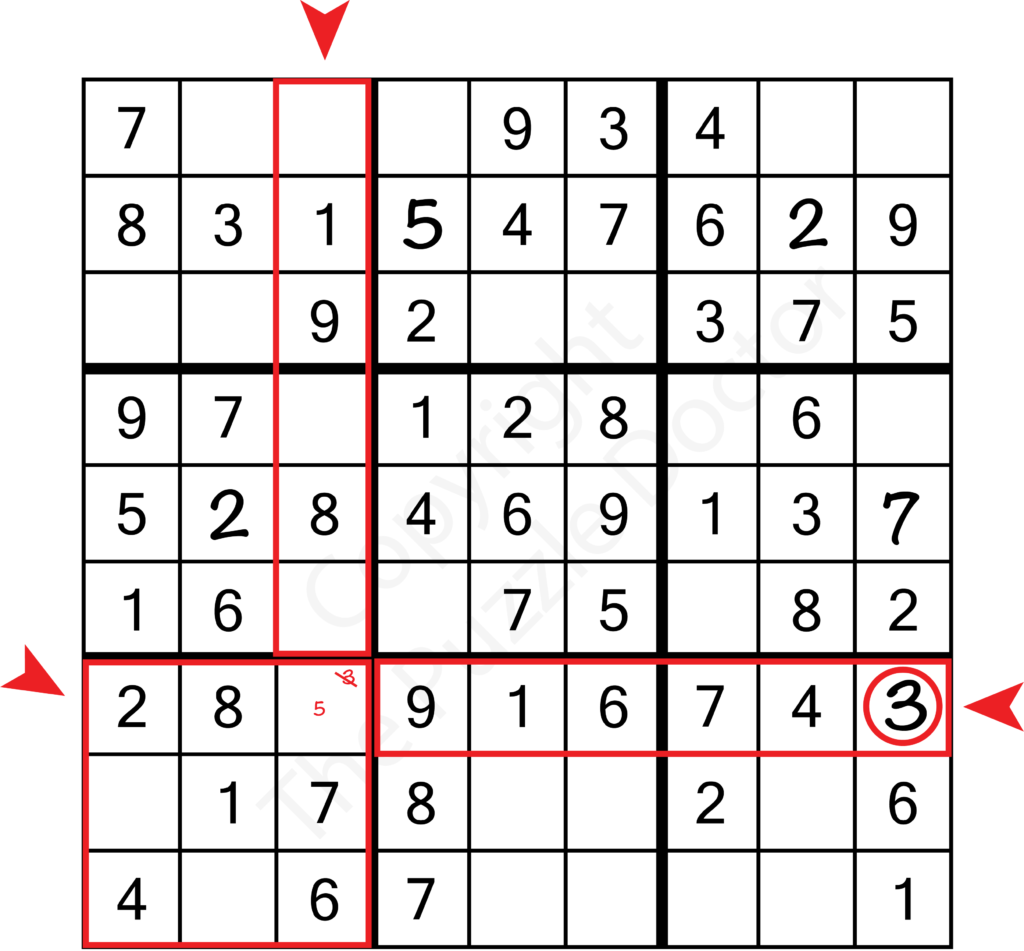
Once again, starting with the obvious, scanning rows, columns, and sub-grids to eliminate candidates makes an easy task of completing our third row.
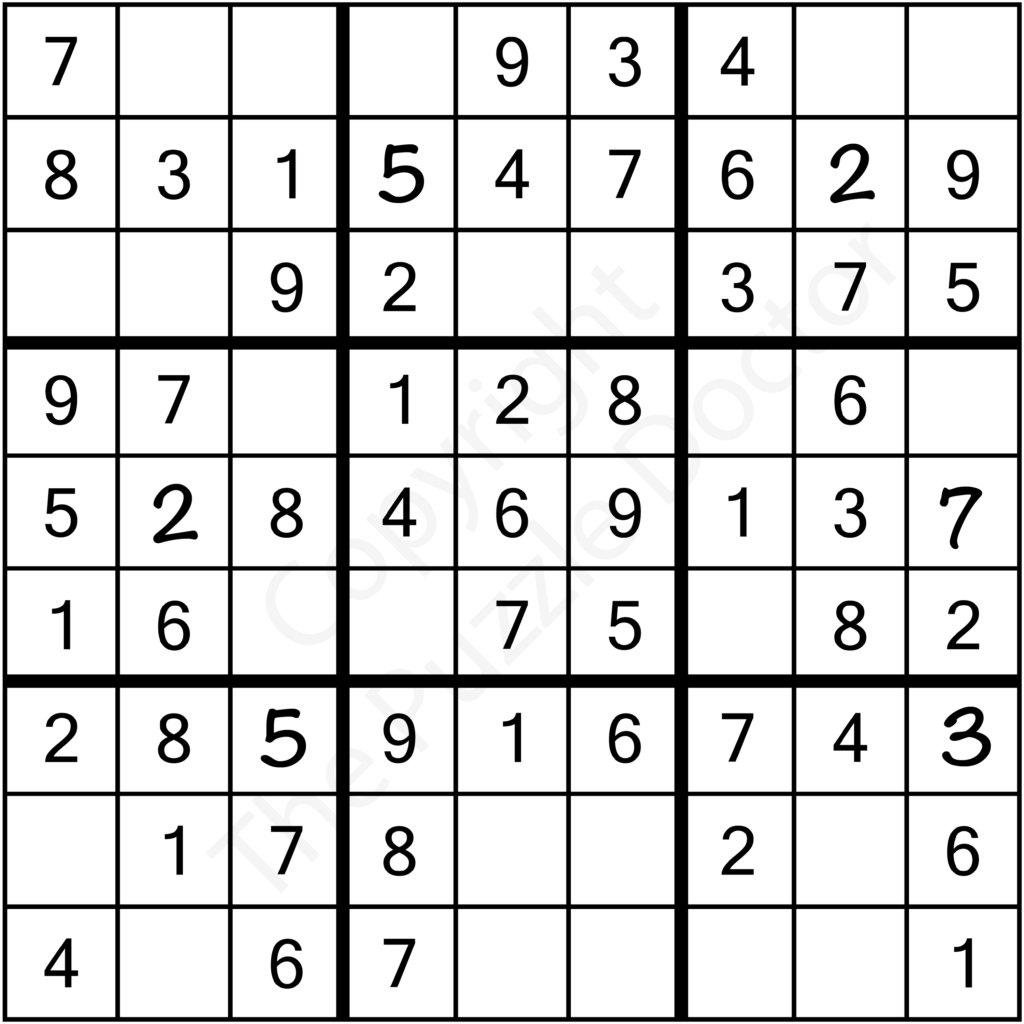
After having completed three rows, the puzzle is really starting to fill out. We now have sub-grid with only one candidate.
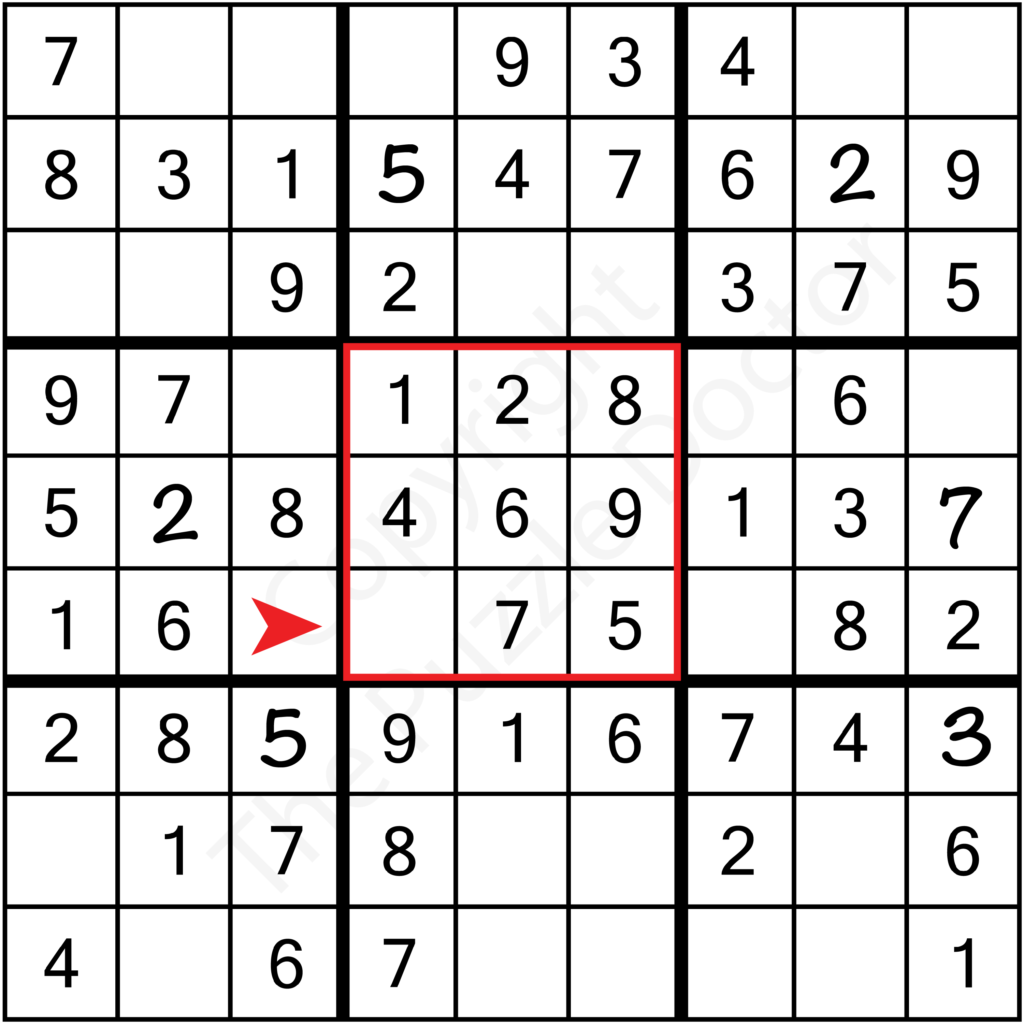
Fill that in and the first sub-grid is complete!

Hexadoku – 16×16 Sudoku
Hexadoku builds upon the foundations of Sudoku while offering a substantially different solving experience. The larger grid creates more relationships between cells and a greater amount of information to process, making each puzzle a unique exercise in logic and pattern recognition. Easy, Medium, and Hard volumes are available throughout the series.
Continue scanning for the obvious
We continue to scan for the obvious and find another obvious choice to fill in
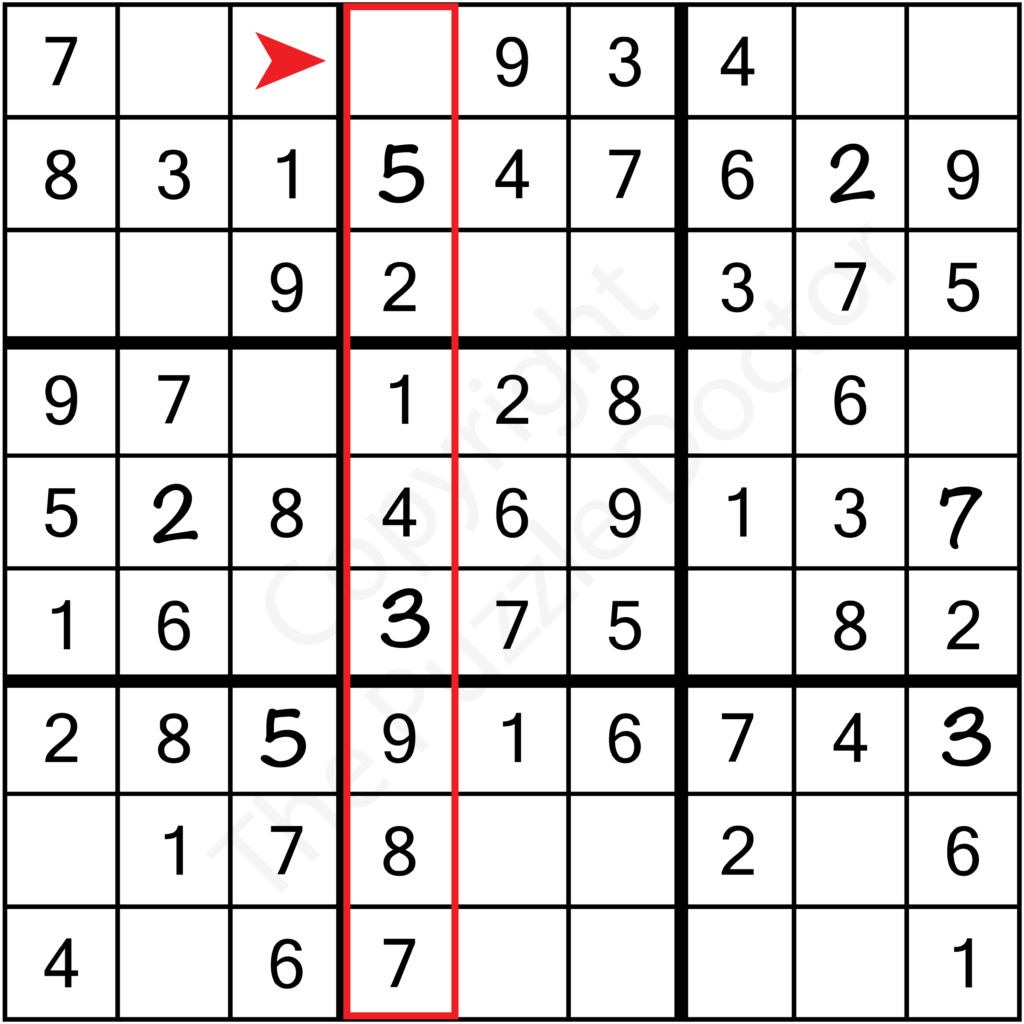
We fill that in and complete our first column!
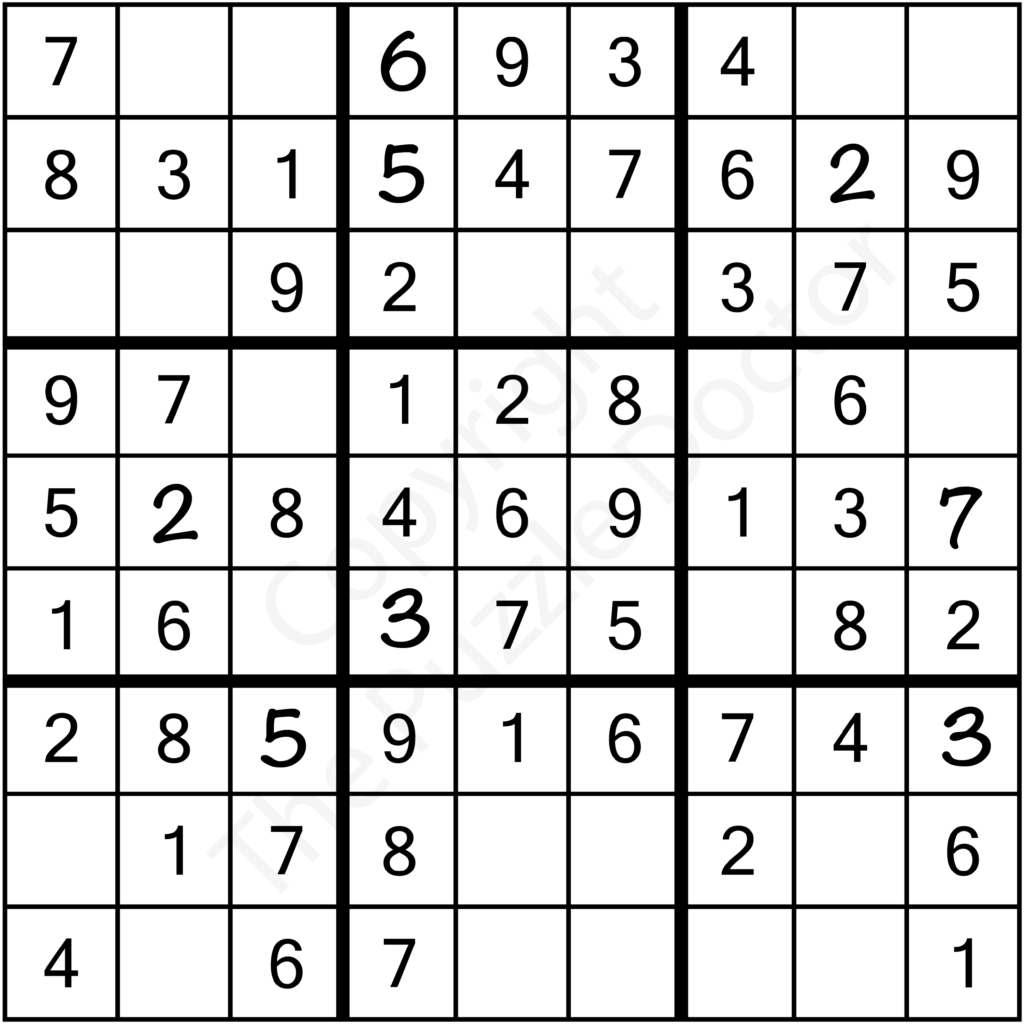
And the process begins again!
Following the same process of looking for rows, columns, or sub-grids that have the fewest numbers to complete, I identify sub-grids 2, 3, 4, and 7 as obvious choices. I choose sub-grid 4. The reason I chose it is because solving it will result in a row and a column having only one remaining candidate to fill in. Essentially, solving it will give me the greatest result.
In sub-grid 4 I see that the number 3 and 4 are missing. Since these are in the same column, I also scan to make sure these numbers are consistent with what is missing from the column. Had I found one of these numbers, it would have indicated an error was made in previous solutions.

Once again using a scanning technique of looking at the associated rows.

I find a number 3 in row F and can eliminate that number as a possibility in column 3 row F.

I fill in the number 4 and then can eliminate that as a possible candidate in row D of the same column and sub-grid.
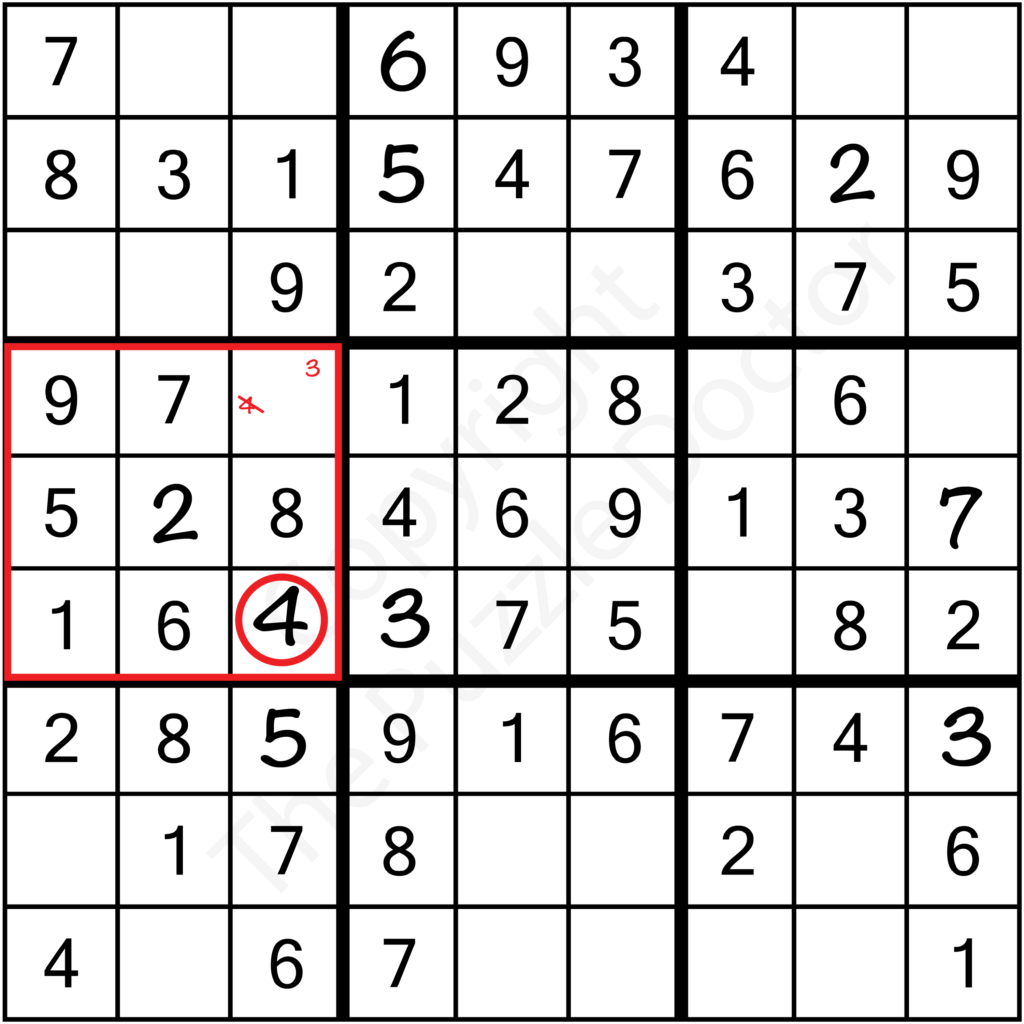
We now have our 2nd sub-grid complete!

Single Candidates found!
I scan the grid again and find a row and a column with only 1 candidate remaining. I determine what these are and fill these in. Making good progress!
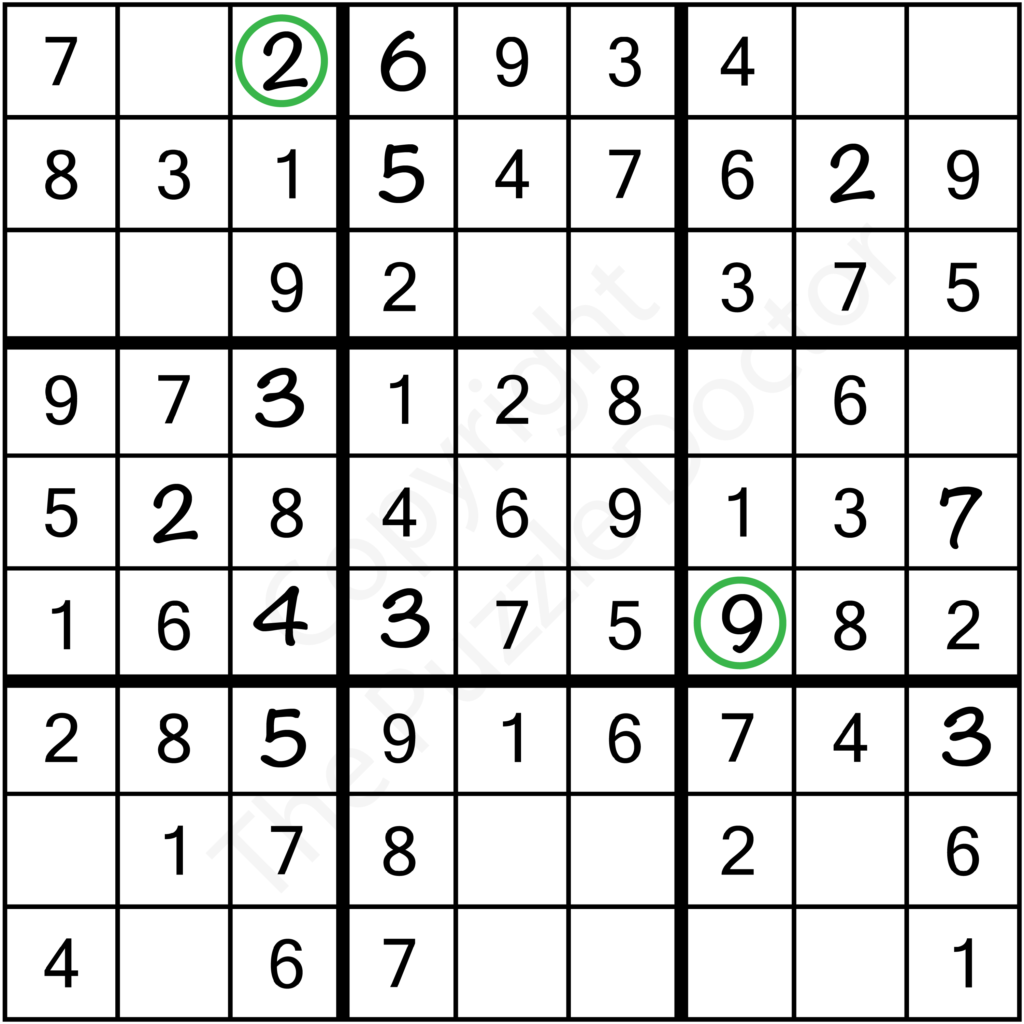
Next, there are a few choices we have about what to solve next. I choose sub-grid 6. The reason I chose this sub-grid is because solving it would result in having the middle third of the Sudoku puzzle complete. I start identifying what numbers are missing from the sub-grid.
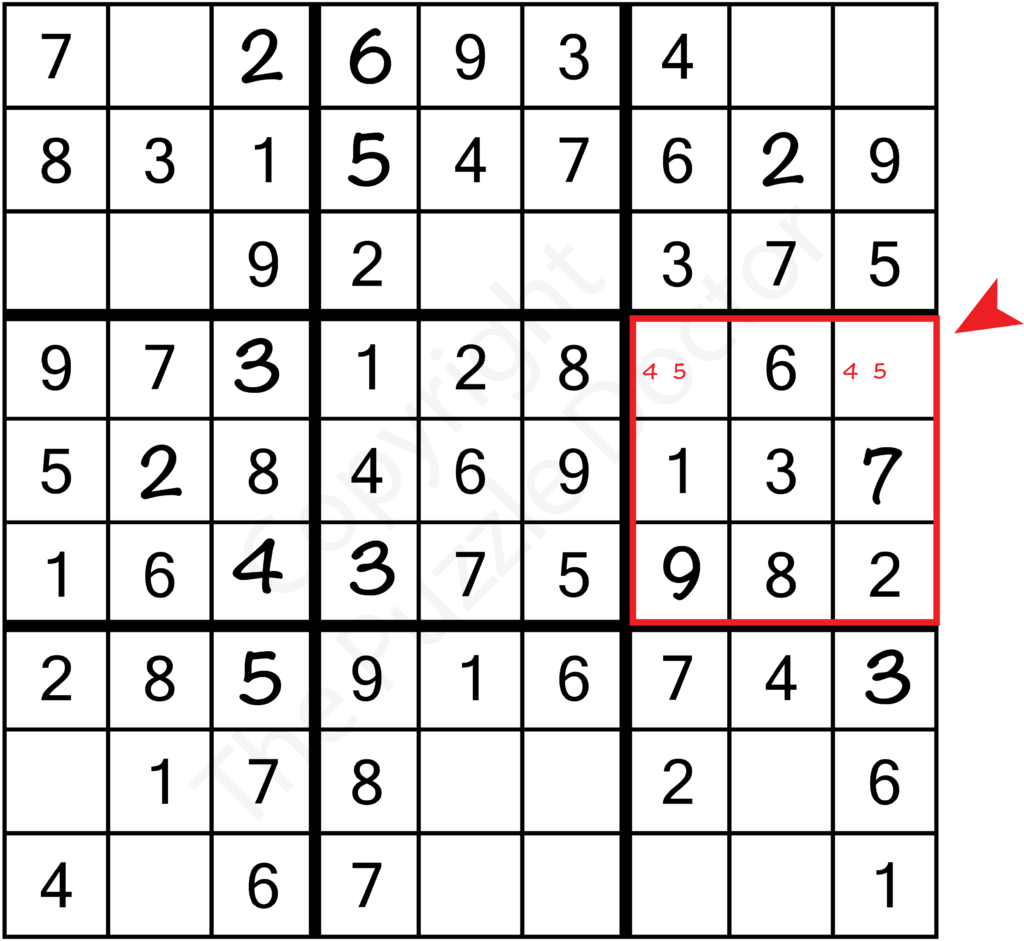
I scan the associated columns to find what numbers to eliminate. I column 7, the number 4 can be eliminated as a candidate. In column 9, the number 5 can be eliminated as a candidate.
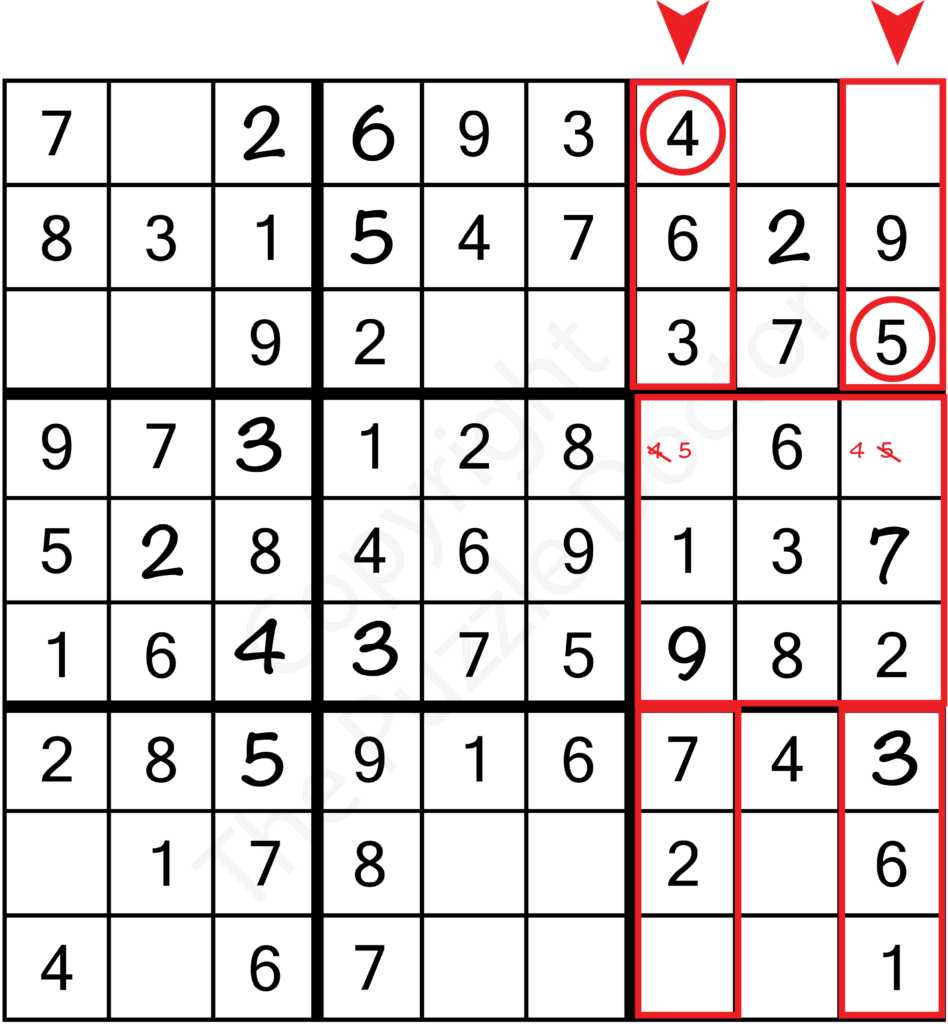
Sub-grid 6 can then be confidently completed!

More Single Candidates!
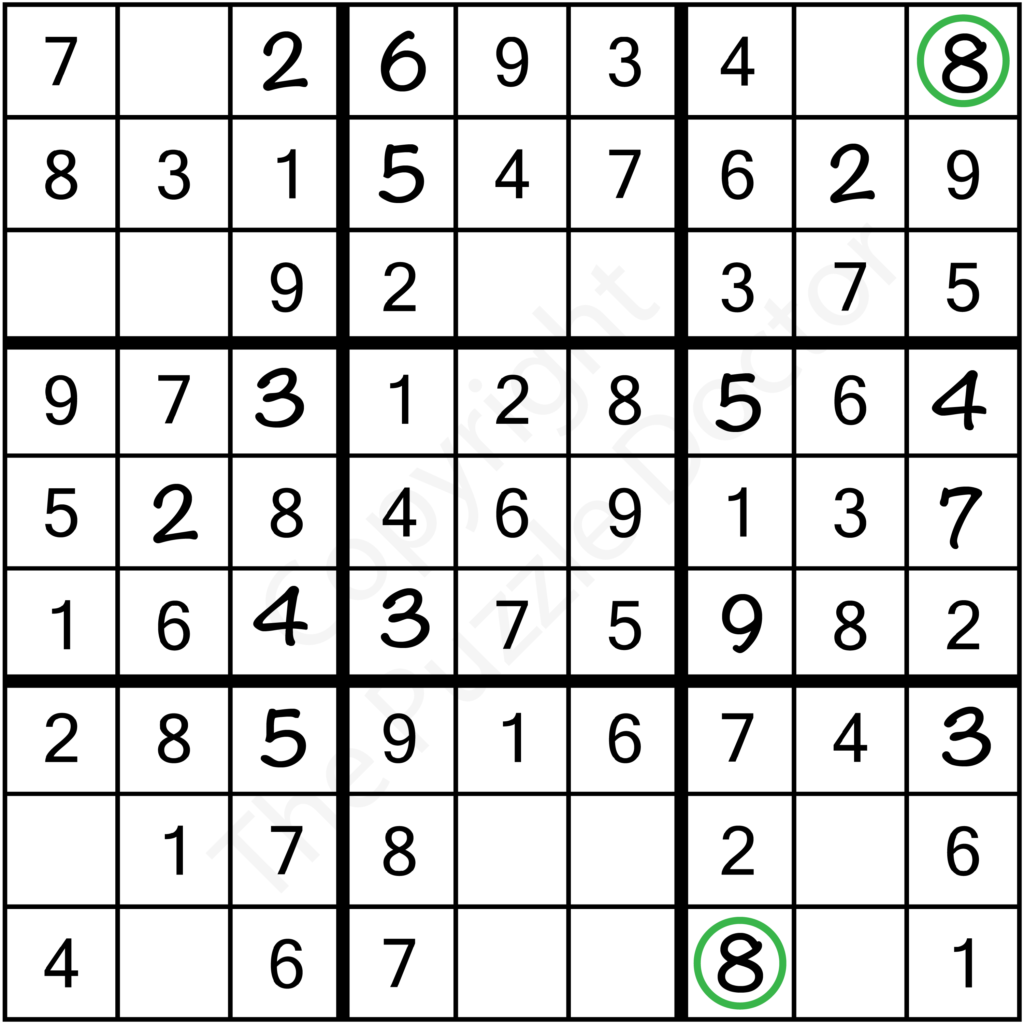
Another sub-grid, sub-grid 3, can then be confidently completed with one remaining number.
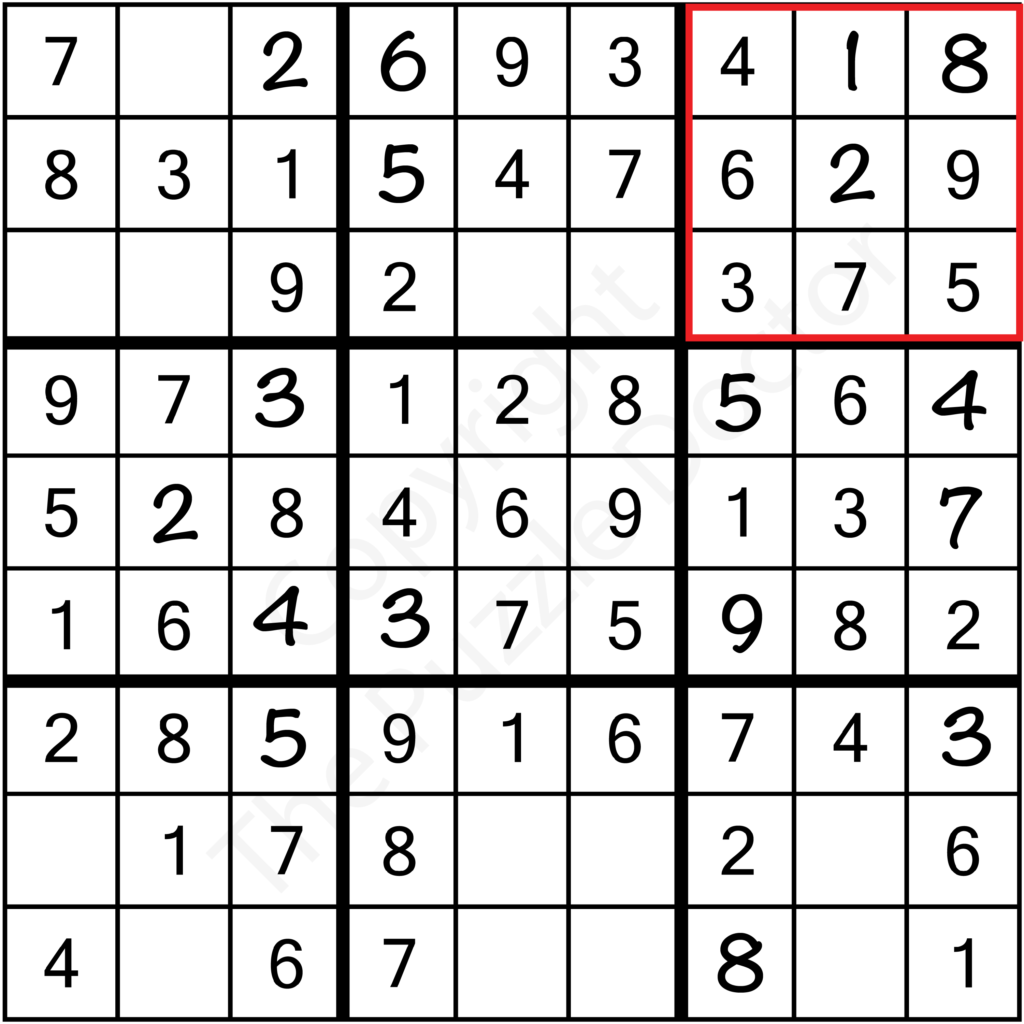
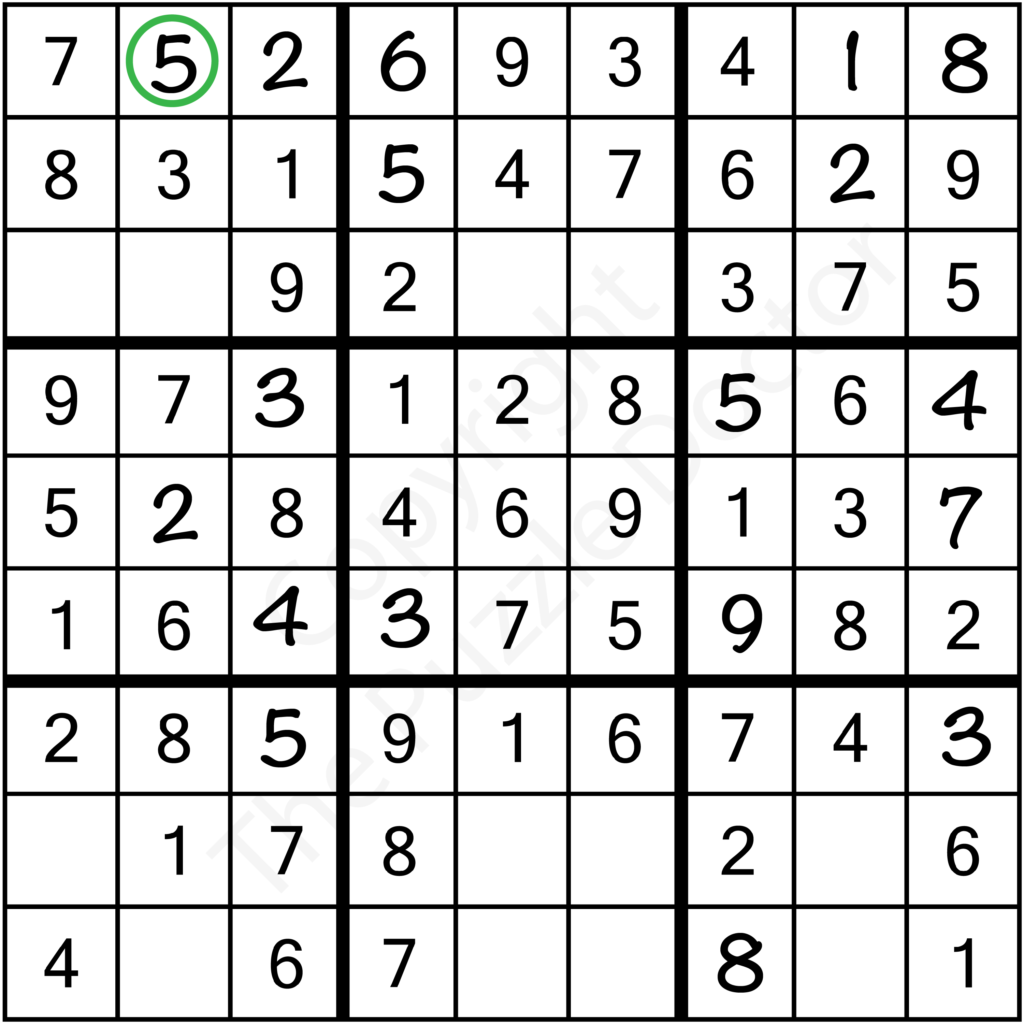
We are left with another obvious choice in row 1. Only the number 5 remains, so we can fill that in. Don’t forget to check the associated columns and sub-grid just in case a mistake was made.
Hexadoku and Sudoku Puzzle Books
Enjoy traditional Sudoku and a challenging variant – Hexadoku. By combining classic Sudoku with 16×16 Hexadoku, this series offers a diverse mix of logic and puzzle-solving experiences that will keep your brain sharp and entertained.
Nearing Completion!
Since the puzzle is near completion and there are a lot of possible choices, I choose sub-grid 1. In this sub-grid, the numbers 4 and 6 are missing. I check that this is consistent with what is missing from the row to ensure I haven’t made a mistake. Using the scanning technique over the associated columns, I note that there is a 4 in column 1 and a 6 in column 2.
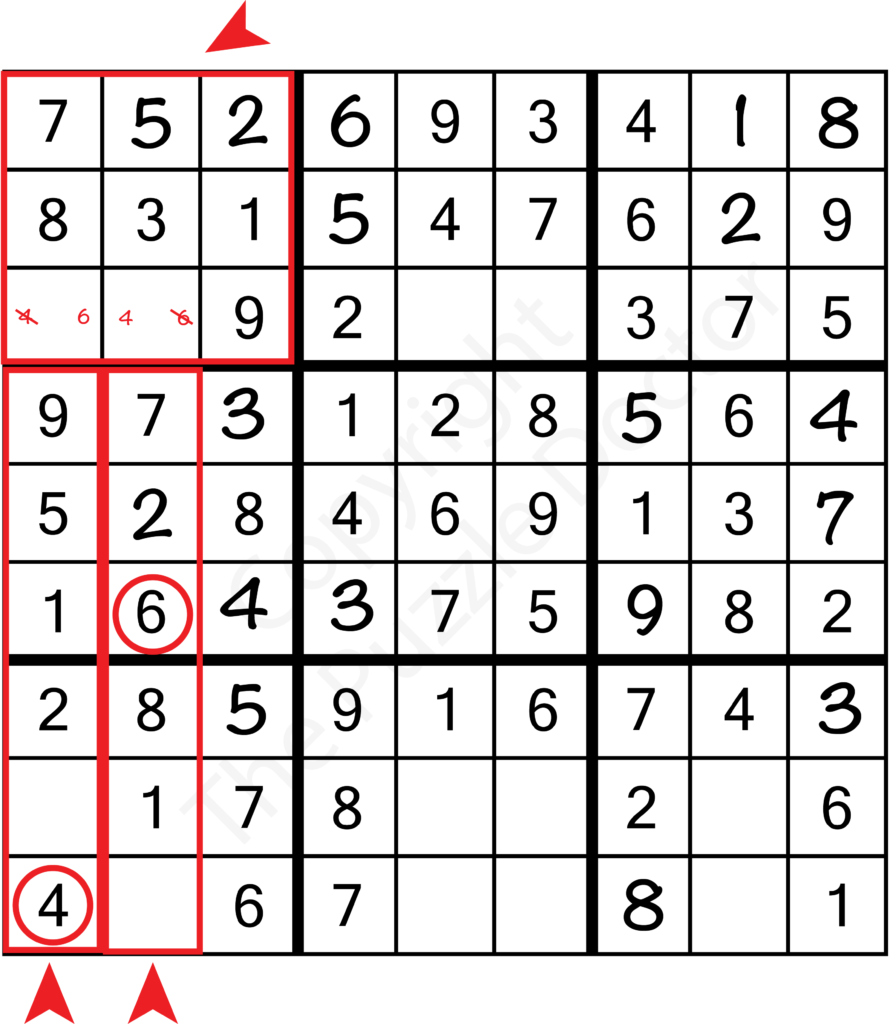
I fill these in and another sub-grid is complete!
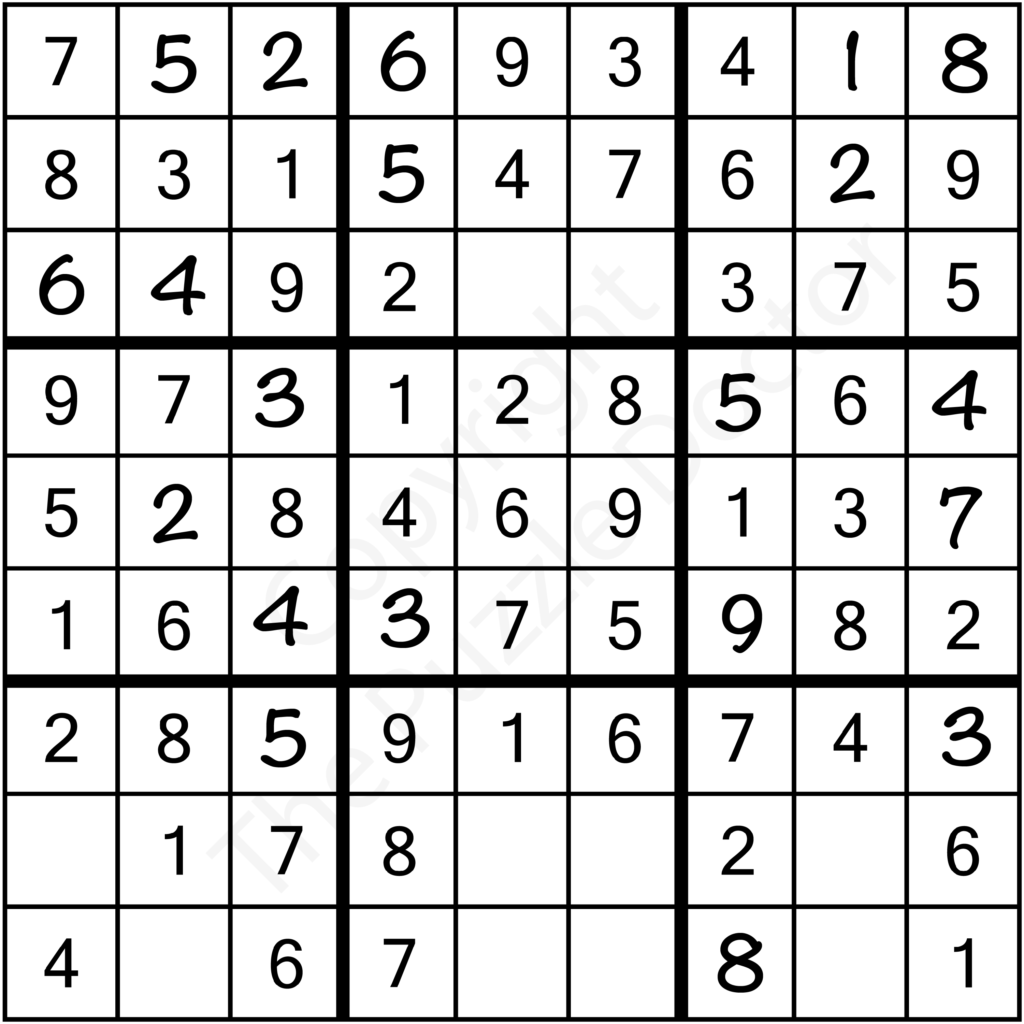
Two single candidate cells open up in sub-grid 7 and we can confidently fill those-in. Don’t forget to always double check by scanning columns and rows just in case a mistake was made.

From here I will illustrate the next steps until completion.


Two thirds complete!

Next steps…


One more sub-grid remains!
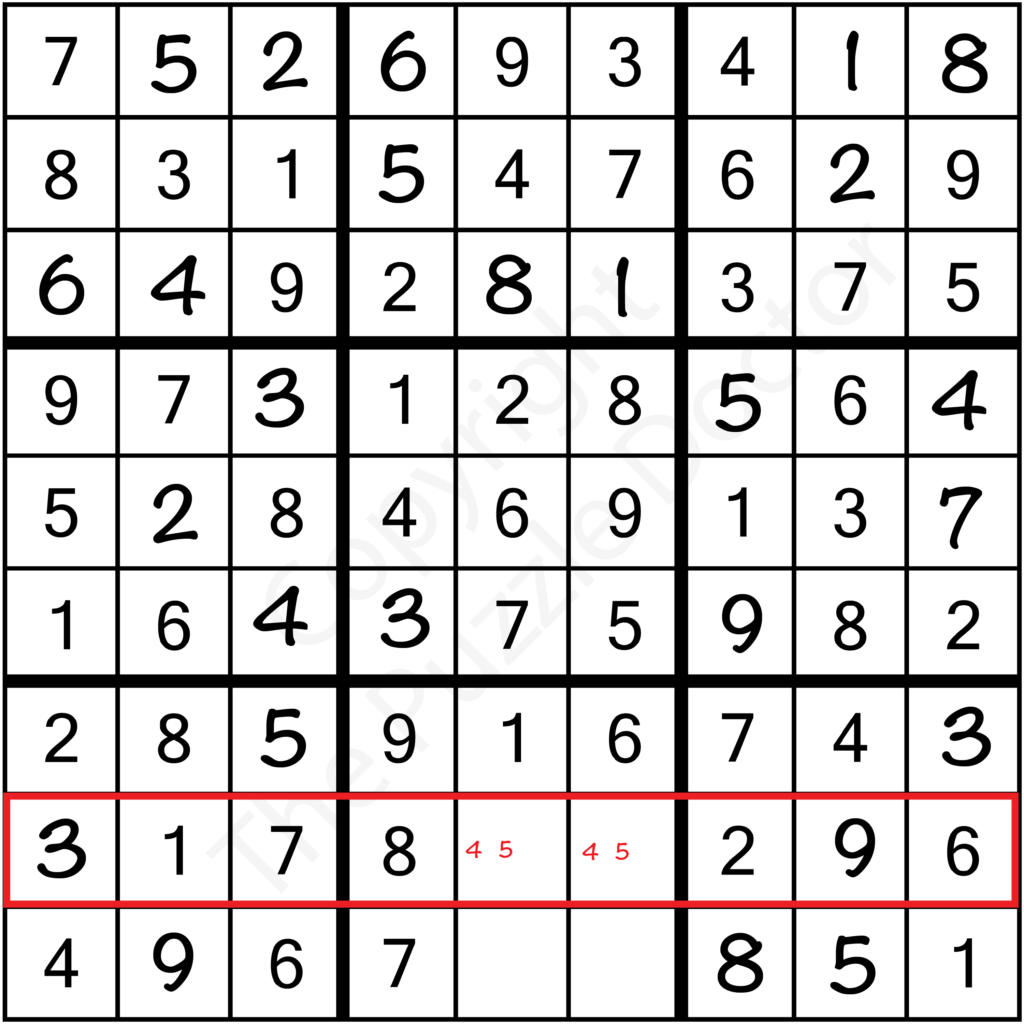

Last row!
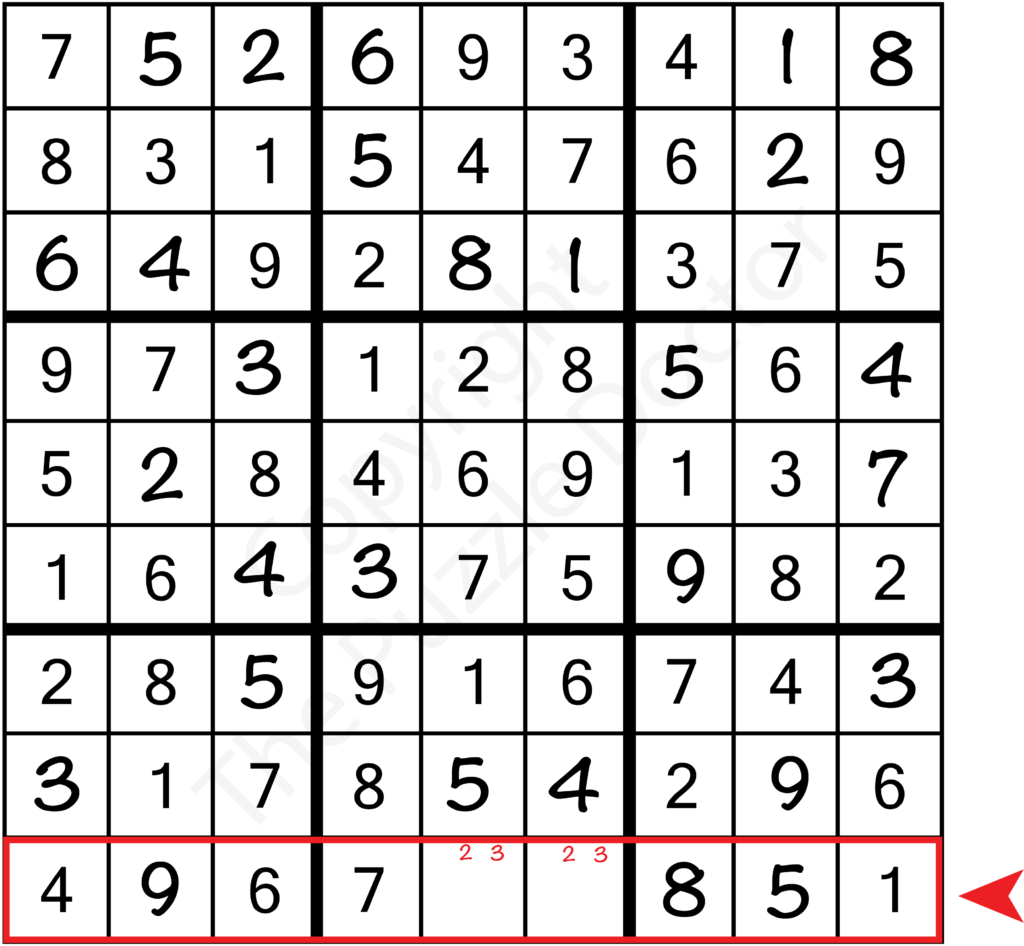

And the Sudoku puzzle is complete!

Unique Cryptogram Puzzles, Codeword Puzzles, and Challenging Word Fill-In Puzzle Books
Logic puzzles come in all shapes and sizes! Whether numbers, math, or letters and words, you’re sure to find a brain challenge activity that’s right for you or someone you know. Cryptogram, codeword, and Kriss Kross puzzle books offer a refreshing alternative to traditional crosswords and word searches, and and alternative to Sudoku. Each puzzle type presents its own challenge while putting your vocabulary and problem-solving skills to the test.
I hope you enjoyed this very easy Sudoku puzzle walkthrough and learned how to approach your first Sudoku puzzles.
Happy Puzzling!